

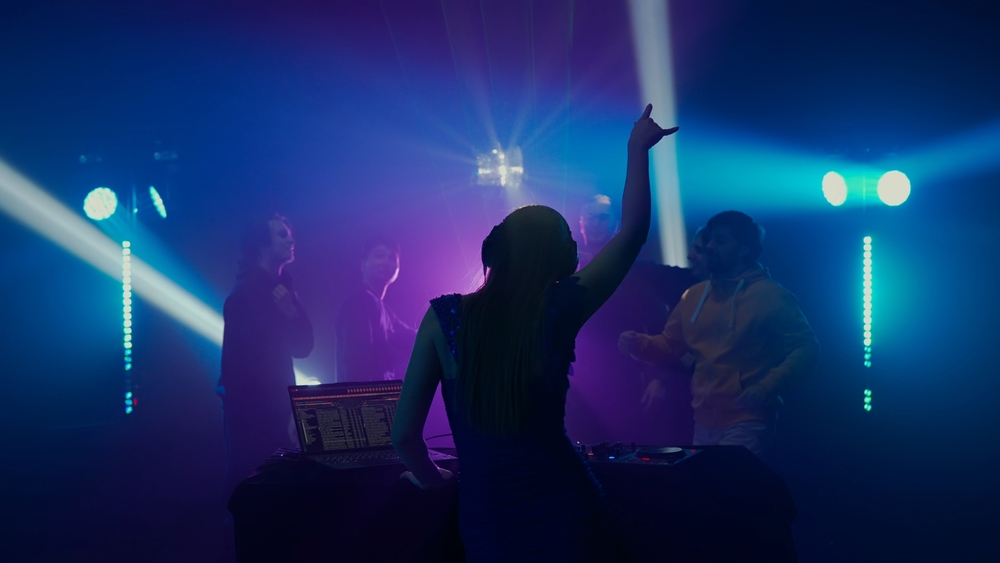
Have you ever been to a wedding where the dance floor was packed from the moment dinner ended until the lights came on? The energy was electric, every song seemed to be exactly what you wanted to hear, and you found yourself saying, “Okay, just one more song” about five times in a row.
Conversely, have you been to a wedding where the dance floor felt awkward? Maybe a few people danced for a song or two, but then a track cleared the floor, and it never quite recovered. The DJ kept playing music, but something was disconnected.
The difference between these two scenarios isn’t just about the playlist. It’s about a specific, intangible skill that separates a Spotify playlist from a professional Wedding DJ. That skill is called “reading the room.”
While it might sound like magic or intuition, reading the room is actually a complex mix of psychology, observation, and musical knowledge. It is the ability to look at a crowd of 150 diverse people—ranging from toddlers to grandparents—and instantly understand what they need to hear to get moving.
In this deep dive, we are going to pull back the curtain on how the best wedding DJs operate. We will explore the subtle cues they look for, the techniques they use to build energy, and why hiring a high-energy wedding DJ who masters this art form is the best investment you can make for your reception.
What Does “Reading the Room” Actually Mean?
At its core, reading the room is about empathy and reaction. A playlist is static; it assumes that at 9:15 PM, everyone will want to hear “Dancing Queen.” But a human DJ knows that maybe at 9:15 PM, the bride is in the bathroom, the groom is at the bar, and the guests are actually in the mood for some 90s hip-hop.
DJs who read the crowd are constantly gathering data. They aren’t just looking at their laptop screens; they are scanning the environment. They are asking themselves:
- Who is dancing?
- Who isn’t dancing, and why?
- Are people tapping their feet at their tables?
- Are people singing along but not moving?
- Did the energy drop during that last verse?
- Is the tempo too fast or too slow for this specific group?
This continuous feedback loop allows the DJ to pivot instantly. If a song isn’t working, a skilled DJ doesn’t wait for it to end. They might mix out of it early, transition into a guaranteed hit, or change genres entirely to reset the vibe.
The Psychology of the Dance Floor
To understand how a DJ controls a room, you have to understand the psychology of a wedding guest. Most people are self-conscious about dancing. They need permission to let loose. They need to feel safe, and they need to feel a collective energy that pulls them in.
The “Comfort Curve”
Early in the night, people are stiff. They are digesting dinner, they are in formal clothes, and the lights might still be too bright. A Wedding reception DJ knows that you can’t start the night with 128 BPM electronic dance music. It’s too aggressive.
Instead, they start with “invitation songs.” These are tracks that are universally liked and low-pressure. Motown, funk, and classic oldies work perfectly here. They tell the guests, “It’s okay to come out here; we’re just having fun.” As the comfort level rises, the DJ can push the tempo and the intensity.
The Power of Familiarity
Humans like what they know. When a DJ drops the opening riff of a song like “I Wanna Dance with Somebody” or “Mr. Brightside,” there is a dopamine hit in the brain. That recognition creates a surge of energy.
However, a DJ can’t just play top hits for 4 hours straight. That leads to “hit fatigue.” The art lies in balancing the massive anthems with the groovy “B-sides” that keep the rhythm going without burning everyone out.
Techniques DJs Use to Build and Maintain Energy
So, how does a DJ physically keep the floor full? It’s not just about picking good songs; it’s about how those songs are delivered.
1. Seamless Mixing and Beatmatching
Silence is the enemy of a dance floor. If there is a 3-second gap of silence between songs (like you get with a playlist), people stop moving. They look at each other. They realize they are tired. They walk to the bar.
Professional DJs use beatmatching to blend the end of one song into the beginning of the next. The beat never stops. This creates a trance-like state where guests lose track of time. They don’t have a chance to leave the floor because the next song is already pulling them in.
2. Genre Weaving
A wedding crowd is the most diverse audience a DJ will ever face. You have Gen Z cousins who want TikTok hits, Boomer aunts who want disco, and Millennial friends who want 2000s pop-punk.
A bad DJ plays 30 minutes of one genre, alienating everyone else. A high-energy wedding DJ weaves them together. They might play a Bruno Mars track (modern pop), mix it into a Michael Jackson track (classic pop), and then transition into a Justin Timberlake track (2000s). This keeps everyone engaged because no one feels left out for too long.
3. Energy Management (The Wave)
You cannot stay at level 10 energy for 3 hours. It’s physically exhausting. If a DJ plays high-octane EDM for 45 minutes straight, the dance floor will eventually empty because people need water and air.
Skilled DJs manage energy in waves. They build the energy up to a peak—hands in the air, everyone jumping—and then they strategically drop a slower or mid-tempo song. This allows people to catch their breath, grab a drink, or slow dance, resetting the floor for the next build-up. This “peak and valley” structure is essential for longevity.
4. Reading Body Language
This is the subtle stuff. A DJ watches the feet. Are people shuffling towards the floor? That’s a good sign. Are they turning their backs to the DJ booth? That’s a bad sign.
They watch the “anchors”—the enthusiastic guests who never leave the floor. If the anchors look bored, it’s a red alert. If the anchors are screaming the lyrics, the DJ knows they are on the right track and can push the envelope further.
Why “Pre-Planned” Sets Don’t Work
One of the biggest misconceptions we hear at The Fire DJs is the idea that a DJ should have a set list prepared before the wedding. While we always prepare crates of music and have a plan, a strict “set list” is a recipe for disaster.
Imagine the DJ plans to play a 20-minute hip-hop set at 9:00 PM. But at 8:55 PM, the Grandma of the bride walks onto the dance floor for the first time all night. If the DJ sticks to the plan and drops a heavy bass track, Grandma leaves, and she might not come back.
A DJs who read the crowd professional will instantly scrap the plan. They will play “Respect” or “Twist and Shout” to keep Grandma there. They know that keeping the older generation involved early in the night is crucial, and they can always play the hip-hop tracks later when Grandma has gone to bed.
This flexibility is what you are paying for. You are paying for a human being who cares about the outcome of the party more than they care about sticking to a script.
The Role of the MC in Reading the Room
Reading the room isn’t just about music; it’s about the vibe on the microphone too. The DJ often acts as the Master of Ceremonies (MC).
A good MC reads the energy level of the room before making an announcement.
- During Dinner: The energy is low and conversational. The MC should be calm, warm, and polite.
- Grand Entrance: The energy is high anticipation. The MC should be loud, enthusiastic, and commanding.
- Late Night: The energy is chaotic fun. The MC can be looser and more interactive.
If an MC tries to be a “hype man” during a quiet dinner service, it feels awkward and jarring. If they are low-energy during the entrance, the moment feels flat. Matching the vocal delivery to the room’s energy is a subtle skill that separates the amateurs from the pros.
How The Fire DJs Approach the Crowd
At The Fire DJs, reading the room is our primary directive. We believe that every wedding is a unique ecosystem. What worked at a wedding last Saturday might flop at a wedding this Saturday.
The “Look Up” Policy
Our DJs are trained to keep their heads up. It’s easy to get buried in the laptop, looking for the next track. But we emphasize the “Look Up” policy. We are constantly making eye contact with the crowd, smiling, and interacting. This connection builds trust. When the crowd trusts the DJ, they are more willing to follow them on a musical journey.
Collaborative Planning
Reading the room actually starts months before the wedding. Through our consultation process, we learn about your crowd.
- Are they drinkers?
- Do they dance?
- Are they mostly family or mostly friends?
- What is the cultural background?
This “intel” gives us a head start. If we know 40% of the guests are from the East Coast and love 80s Rock, we have those tracks prepped and ready to deploy. You can see how our different DJs approach their unique styles on our DJ Team Page.
The Risks of the “Spotify Wedding”
We have written about this before, but it bears repeating in the context of reading the room. A Spotify playlist is blind. It cannot see that the dance floor is empty. It cannot see that the song it just played cleared the room. It will just keep playing the next song in the queue.
We have seen weddings where a “perfect” playlist failed because it was played in the wrong order for that specific group of people.
- It played the slow songs when people wanted to jump.
- It played the line dances when people were at the bar.
- It played the explicit rap songs while the flower girl was on the floor.
Without a human pilot to steer the ship, the party is at the mercy of an algorithm. And algorithms don’t have souls.
How to Help Your DJ Read the Room
While the DJ does the heavy lifting, you as the couple can help set them up for success.
1. Provide a “Do Not Play” List
This is huge. If you hate Country music, tell us. If we play a Country song thinking it will work and you (the bride) walk off the floor in disgust, that kills the vibe instantly. Knowing your boundaries helps us navigate the room safely.
2. Trust the DJ with Requests
Guests will request songs. Some requests are gold; some are grenades. A drunk uncle might request a 12-minute progressive rock song. If the DJ plays it, the floor dies.
Trust your Wedding DJ to filter these requests. We know how to politely say, “I’ll see if I can fit that in,” and then conveniently “forget” it if we know it will kill the energy. Conversely, if a bridesmaid requests a song and we see five other bridesmaids cheering for it, we will prioritize that track immediately because we know it will create a moment.
3. Be Present on the Floor
The most important factor in a full dance floor is you. The couple are the leaders of the tribe. If the newlyweds are on the dance floor, the guests will be there too. If you are at the bar or outside smoking, the guests will drift away.
If you want a packed dance floor, stay on it. Your DJ will feed off your energy, and the crowd will follow your lead.
Signs You Have Hired a Pro
How do you know if a DJ is good at reading the room before you hire them?
- Check Reviews: Look for phrases like “kept everyone dancing,” “knew exactly what to play,” and “read the crowd perfectly.”
- Ask Scenarios: In your interview, ask them: “What do you do if the dance floor is empty?” A pro will have a specific strategy (e.g., “I switch genres,” “I get on the mic and do a quick interaction,” “I play a line dance to reset”).
- Experience: Reading a room takes time to learn. It comes from hundreds of gigs—failures and successes. An experienced DJ has seen it all and has a toolkit of solutions.
Conclusion: The Flow State
When a DJ is reading the room perfectly, the night enters a “flow state.” The transitions are smooth, the song choices feel almost telepathic, and the energy in the room becomes a tangible force. It’s that magic feeling where no one looks at their phone, no one cares about the time, and everyone is united in the music.
This is what we strive for at every single event. It’s not just about playing music; it’s about curating joy.
If you are looking for a Wedding reception DJ who cares as much about the vibe as you do, we would love to chat. Visit our Weddings Service Page to learn more about our approach, or Contact Us to see if your date is available.
Let’s build a night where the dance floor never stops.

